My heart beats for both Peters

My tribute to Peter Herrick, my namesake.

Before he was drafted into the Ultra Secret Enigma cryptography operation at Bletchley Park, my future Father, AT Pilley, served at Aldergrove aerodrome, Belfast.
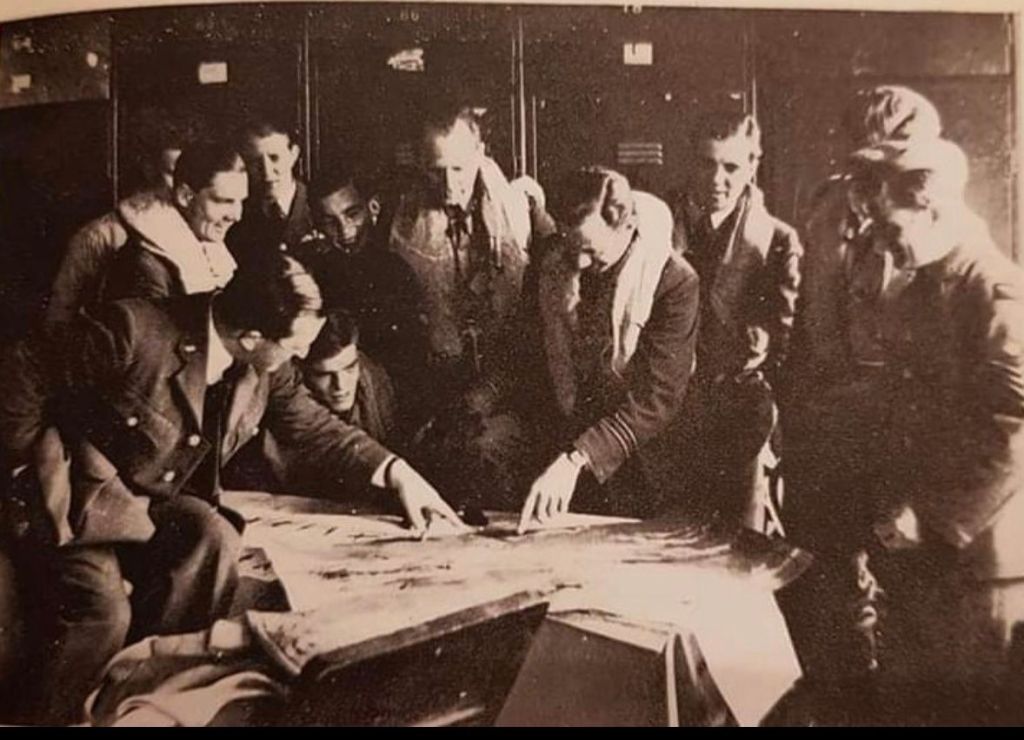
AT Pilley pointing, seated left in photo from ‘Combat Report’, by Hector Bolitho, 1943

This was one of a group of merchant navy air defence stations, tasked mainly to protect vital shipping lanes bringing supplies from America into ports like Liverpool. He was at first Squadron Leader, then Intelligence Officer.

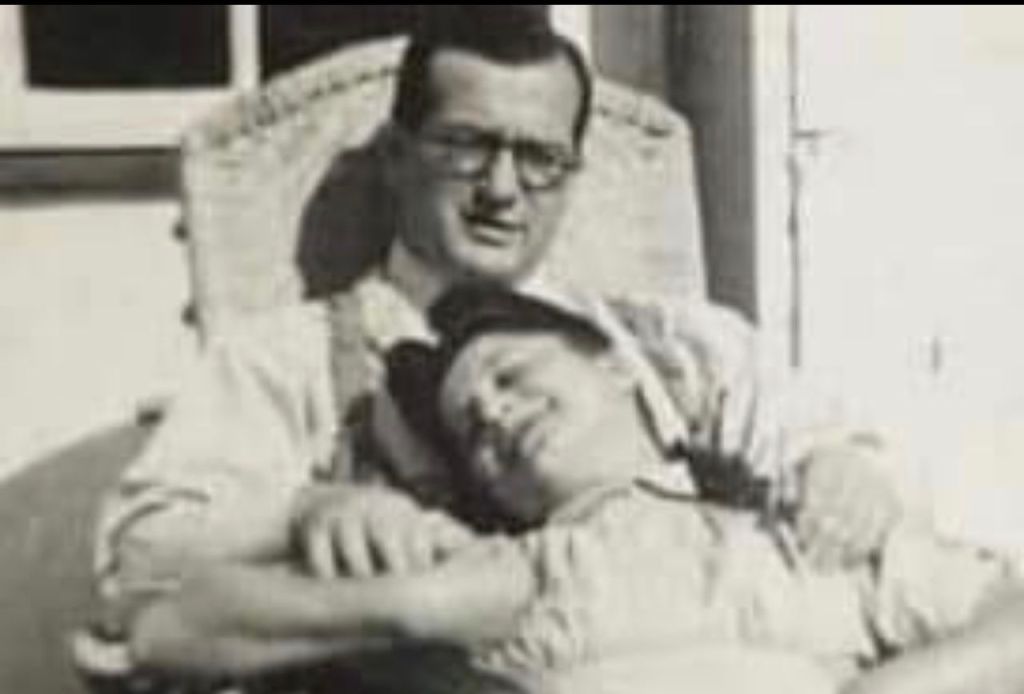
My Dad and his young wife Nora became friends with one of the Spitfire pilots. My Dad and he would fly to Hendon Aerodrome, Colindale, north of London, and motor from there to Aylesbury to spend some Leave time together at Hazel Cottage.

Today, I look again at the heart-warming snapshot of my Mum and Dad together. I ask who could have held the camera?
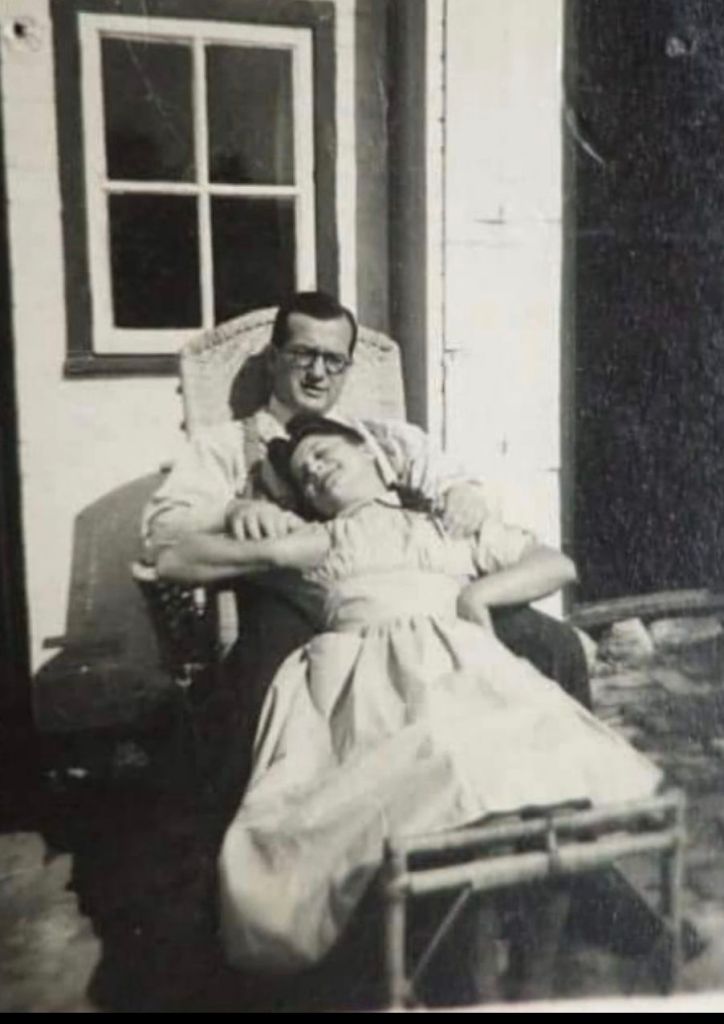
The cottage is at the end of a farm track, after a ‘No Through Road’ leads to the hamlet called Sedrup Green.

The dwellings, including Hazel Cottage, are set around the cow pasture belonging to Sedrup Farm. Sedrup can be seen on the Domesday Map drawn up by command of William the Conqueror in 1086AD. Most of them are still there.

If Sedrup is a remote place today, it was all but undiscoverable in the 1940s. Many people from the nearest village of Stone, some twenty minutes walk away on the Aylesbury to Oxford Road, had never been to Sedrup.

Water was drawn in buckets from garden wells, with the exception of one with a spring-fed pond. Mains gas and electricity only arrived here in the 1960s!

My Father’s family in London would not have visited. It was wartime. My Mother was the only member of her extended family from the Netherlands not living in Occupied Europe.

I am of the belief that the third person, the taker of this unguarded intimate scene, could only have been Peter Herrick, my namesake!

One tragic night over the Irish Sea, the plane carrying this young man and some of his RAF colleagues bound for weekend leave in Liverpool developed engine trouble. It crashed into the sea with the loss of all on board. My Father had been invited, but had refused on this occasion.

The pressures and constraints placed on the scarce aviation resources at that period sadly were contributing factors of such mishaps.

The young man’s name was Peter Herrick. I was born just under a year after VE Day. My parents named me Peter in a tribute to their dear friend Peter Herrick.
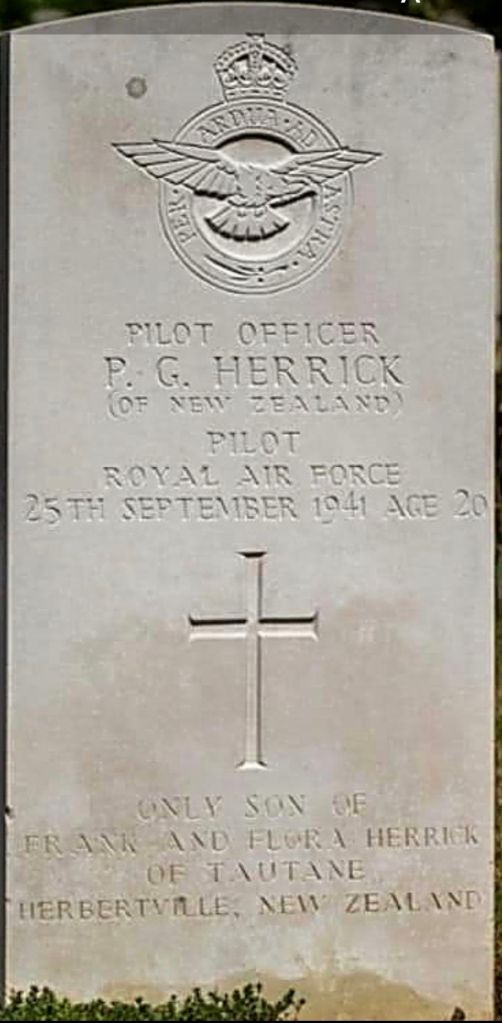
With his trademark sleuthing for adventure, my Dad took time out on an assignment in New Zealand in the 1970’s and tracked down living relatives of his old friend

My heart beats for both Peters. And my continuation is in some measure our mutual redemption and a way of honouring renewed life made safe to live through human sacrifice on unimaginable scales!

~ Love is present EveryNow
Miz Maze & Breamore

near the Miz Maze

Breamore and Miz Maze – some lines in praise

Breamore is one of my favourite places in Dorset.

The charm of the place name of Breamore is that it will never get to be pronounced as it appears on paper, neither today, nor tomorrow, and this is how the locals would have it, as it always has been from times immemorial.

To a person who walks with receptivity and who has eyes to see, there are still surface characteristics, and traces of the workings and the worship by seasonal routines of the earliest settlers on these fertile furlongs.

Relics can be discerned of the nurture and respectful land management from their effect on the ground of ancient legs and hands, and in the way the landscape has been allowed to roll and unfold, as well as in the disposition of the extant flora, in particular the avenue of Yew Trees.

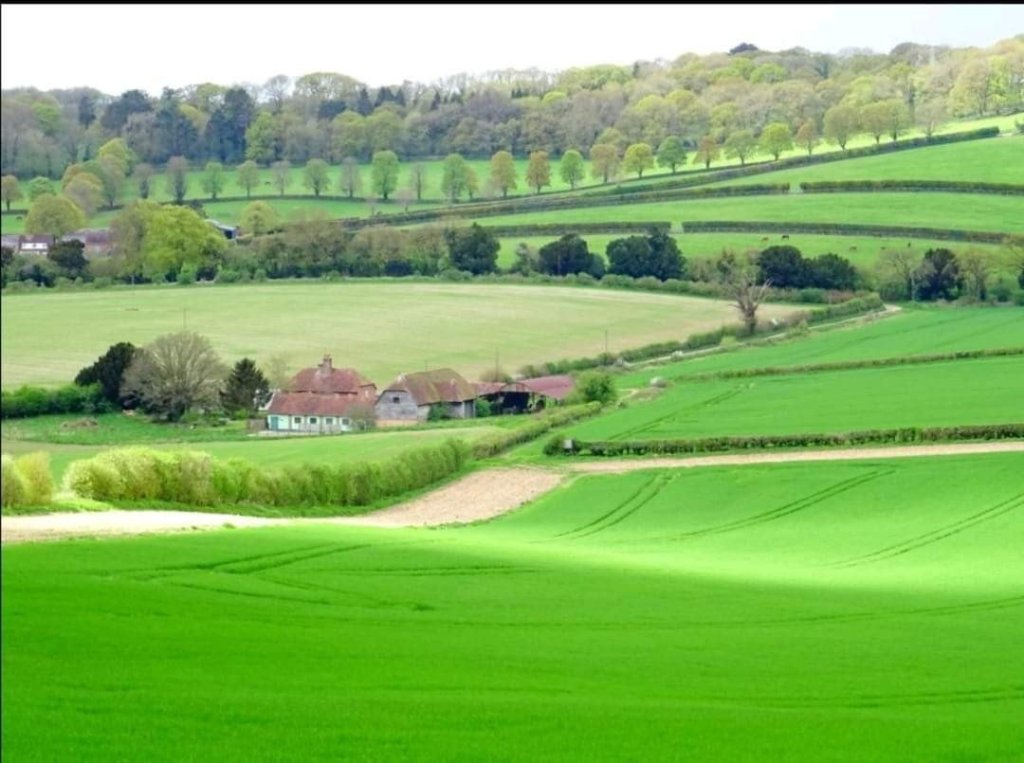
This view in my photo has none of the trees in question. I slid under barbed wire and down a bank to take this panorama about a hundred yards from the line of the Yew enclosed track.

They will all have been planted as borders along at least a mile of footway leading gently uphill to the Breamore Miz Maze, one of England’s eight surviving Neolithic turf mazes.

Though these Yews seen today are sadly disrespected, for the lack of people purposed with their health and well-being, each one in their ground-holding today stands witness to their continuous presence throughout centuries gone by.

Those days are long ago to our kind. The noble Yews count out time at four blinks-a-year. They remember when enough hands were living hereabouts to manage and maintain them.

Those ordinary land workers followed the path of working traditions established through customs of usage by their forebears, who had in their turn devoted part of their time to their duties to the Yew Trees.

These rites of care they performed alongside their other work out of respect for the wisdom of the folklore passed down from the ancients who had lived with the awe that the natural and magical and mystical properties of the Yew Trees inspired.

Any sapling requires a minimum of protection to survive on its way to maturity. Some of the trees along here are these days in a pitiably broken, delapidated state.

Nor you nor I need arboriculture to recognise neglect and disrespect where casual damage and overclimbing brambles are evident.

There are many full grown yews here. I see them as statements of ancient human will. Decision makers a long time ago intended them to be growing here, each in its place on either side of this thoroughfare, perhaps in perpetuity, as they would have had it in their minds’ view.

I see them in their shaded orderly procession as contrasted to the acres to the east and west whose unbroken flatness was created by machine under the will of other, more modern minds.

The lines in the landscape are still available to be seen. They are so empty and silent of oxen, of horse, and of men in their hardy boots, coarse-cloth clothes, head caps and gruff chit-chat.

In their landscape I believe I still see where they took themselves, one after the other on their working ways, mornings to and evenings from, season after season.

Every place of habitation, shelter for beast or man, place of veneration, memorial or worship, every roadbend, hillcrest, stream, dugout or hillock visible today were joined by footsteps following footsteps in lines of service and daily sacrifice.

I see time’s imprint all over these lands, either by design, or by default of neglect or disregard for the ancient patterns.

The land shapes are often readable marks, interpretable very much like the notes on an old music score. Here is pattern, rhythm, glory, major chords of root, and upthrust of choral gladness in the Sun’s light. Here too is destruction, cynical trashing that clashes a terrible dissonance against the greatness of this year’s delicate greening.

Wide open I pass by, and where I can pause my footfall on a noiseless day, I am like to hear the past speak up from the earth. I am with the people whose blood and bones it once nourished.

They are me. I am they. 

It is a simple, and often extremely poignant exchange of recognition, gratitude and kinship performed walking alone and in silence.

A brief study of the specialist maps which list ancient monuments, Neolithic and other earthworks, and Roman to Victorian road and field boundaries, is most revealing of the vast bustle of noises from beyond the past. Empty now of sound.

Love’s presence

The Breamore Miz Maze is one such place where lines of connection, ceremony and duty converged and do still converge, even if the lines today are carrying the feet of the curious, the nostalgic, the dog-walkers and the occasional intrepid lovers!

E v e r yN o w